Не Небраска
Jun. 15th, 2020 01:17 pm![[personal profile]](https://www.dreamwidth.org/img/silk/identity/user.png) tijd
tijd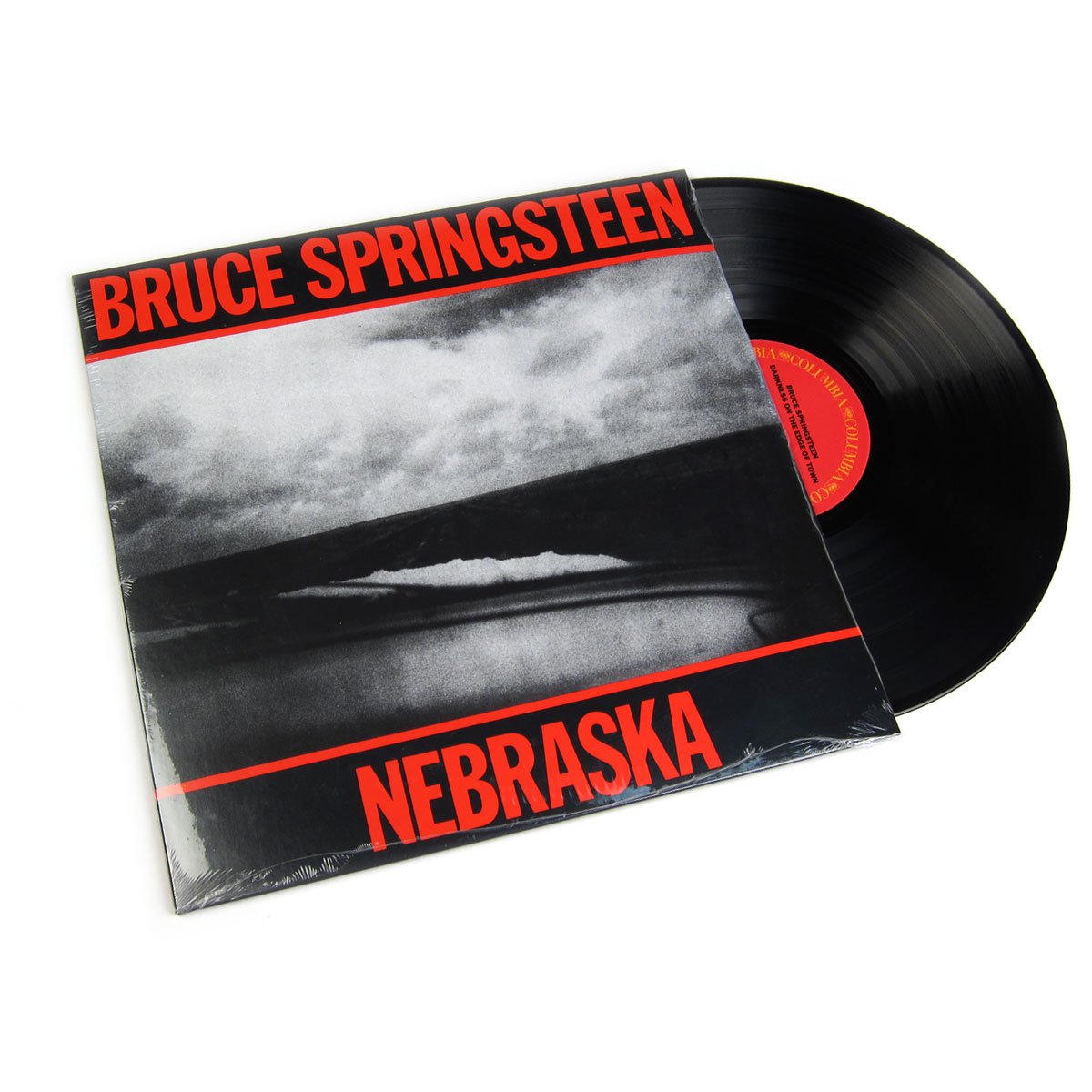
Распространение США на Запад в середине 19го века и вопрос включения Небраски в качестве нового штата породил конфликт, из которого родилось движение анти-Небраска, которое затем переросло в республиканскую партию, популярность Авраама Линкольна и Гражданскую войну.
Вопрос стоял о том, возможно ли распространение рабства в новые штаты и кто должен это решать. Позиция Линкольна заключалась в том, что моральные принципы, на которых основана либеральная демократия, не сводятся к простому большинству голосов.
Well I doubt not that the people of Nebraska are, and will continue to be as good as the average of people elsewhere. I do not say the contrary. What I do say is, that no man is good enough to govern another man, without that other's consent. I say this is the leading principle---the sheet anchor of American republicanism. Our Declaration of Independence says:
"We hold these truths to be self evident: that all men are created equal; that they are endowed by their Creator with certain inalienable rights; that among these are life, liberty and the pursuit of happiness. That to secure these rights, governments are instituted among men, DERIVING THEIR JUST POWERS FROM THE CONSENT OF THE GOVERNED."
I have quoted so much at this time merely to show that according to our ancient faith, the just powers of governments are derived from the consent of the governed. Now the relation of masters and slaves is, PRO TANTO, a total violation of this principle. The master not only governs the slave without his consent; but he governs him by a set of rules altogether different from those which he prescribes for himself. Allow ALL the governed an equal voice in the government, and that, and that only is self government.
https://www.nps.gov/liho/learn/historyculture/peoriaspeech.htm
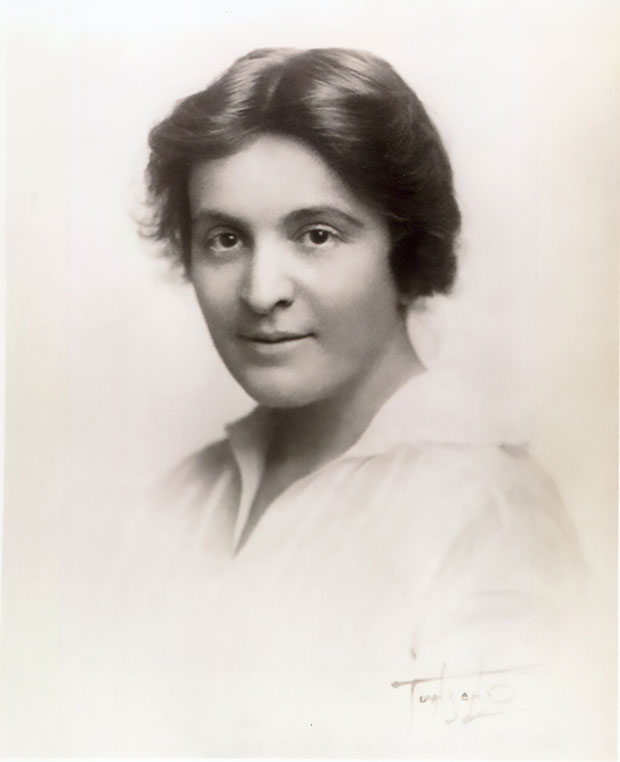
Не пройдёт и 50 лет после избрания избрания Линкольна президентом, как в столице Небраски, названной его именем, получит университетское образование Аннис Чайкин, дочь еврейских иммигрантов и участница борьбы за права женщин. Ее сын Тед Чайкин Соренсен так описывал своё рождение:
I was born in a Catholic hospital, where my Jewish mother, Annis Chaikin Sorensen, valued the loving care of the nuns on the hospital staff. My father, Christian A. Sorensen ("C.A."), an insurgent Republican making his first run for public office that year, wrote to the head of America's "Hoover Booster Clubs": "Our family was increased this morning by another son. I am going to have a Republican club of my own." A journalist friend, referring to my birth as well as my father's campaign, wrote him from Ohio: "That, properly press-agented, ought to be good for a few thousand extra votes."
There was no christening or baptism rite in the Unitarian Church which my parents attended. I was named at birth Theodore Chaikin Sorensen. Theodore Roosevelt, decades earlier, had led the progressive wing of the Republican Party to which my father belonged. When I was three years old I received a letter from Theodore Roosevelt Jr., the result of a chance encounter between him and my father; it noted that he and I had both been named for the same great man. "From the commotion that the letter caused in the Sorensen household," C.A. wrote back, "[little Ted] knew that something unusual had happened which some way or other involved him."
My mother, a pacifist who did not approve of Teddy Roosevelt's resort to military means for semi-imperialist objectives, always insisted that I was named not for the hero of San Juan Hill, but for the Greek words meaning "gift from God." An early feminist, she also insisted that her children receive her maiden name in addition to our father's last name — and the five of us were Chaikin Sorensen ever since; two names sufficiently unusual that we all became accustomed to misspellings. Books, newspapers, and magazines continue to do so; the New York Times has misspelled my name more than a hundred times in headlines and articles over the past fifty years. My mother's successor as editor of the University Journal, noting upon her departure that "Annis Chaiken resigned to become Mrs. C. A. Sorenson," misspelled both her maiden and her married name in the same sentence.
Throughout my life, I have reflected on my good luck; but never was I more fortunate than on the day of my birth. Among the hundreds of thousands of babies born that day, I won what my fellow Nebraskan Warren Buffett has called the "great genetic lottery." My friend Khododad Farmanfarmaian was born that same day on the opposite side of the world, in Persia. He was ultimately forced to flee for his life from his native country, hidden in a Kurdish hay wagon. I was born into a country protected by the rule of law.
I was raised by parents who were healthy, intelligent, college educated — and determined to see their children be the same. I was also fortunate to have been born in Nebraska. The city of Lincoln in my youth was small, lovely, and quaint; full of parks, stone churches, low buildings, small shops, and shaded streets. Although I heard rumors in grade school from older boys about an establishment called "Ma Kelly's," Lincoln was a wholesome place in which to grow up, the kind of small-town environment now seemingly gone forever. It was a city "in the middle of everywhere," as one Nebraska roadside sign proclaims. That message was confirmed for me as a small boy on a drive through central Nebraska with my parents, when we came upon a sign with two arrows, one pointing east, reading "New York World's Fair, 1,454 miles," and the other pointing west, reading "San Francisco World's Fair, 1,454 miles."
Even after I moved to Washington, D.C., and thereafter traveled the world over, from Fujairah to Bujumbura, from Skopje to Singapore, I always cherished the city of my birth — the safe, peaceful, predictable environment that nurtured my childhood and laid the foundation of my life and career. Of all the cities in which I have lived — Lincoln, Washington, Boston, and New York — the air, water, and politics were always cleaner in Lincoln.
I have occasionally wondered: Can a political career be affected by the name of one's hometown? Hope? Independence? What I do know is that growing up in a city named for Abraham Lincoln, whose stately statue stood by the state capitol in front of a wall on which his Gettysburg Address was inscribed, intensified my interest in the man, his life, and his speeches — speeches I have been quoting ever since.
https://www.nytimes.com/2008/05/18/books/chapters/first-chapter-counselor.html

Соренсен станет ближайшим советником и спичрайтером президента Кеннеди (JFK). Его перу принадлежат самые известные речи Кеннеди, от "Ask not what your country can do for you" до "Ich bin ein Berliner", а также письмо Кеннеди Хрущеву в разгар Карибского кризиса, которое остановило мир от скатывания в ядерную войну.
До того, как Кеннеди стал президентом, Соренсен сыграл ключевую роль в раскручивании его популярности, написав за Кеннеди книжку "Profiles in Courage", которая стала бестселлером, получила в 1957 Пулитцеровскую премию и добавила Кеннеди ауру мыслителя.
On December 7, 1957, journalist Drew Pearson appeared as a guest on The Mike Wallace Interview and made the following claim live on air: "John F. Kennedy is the only man in history that I know who won a Pulitzer Prize for a book that was ghostwritten for him."Wallace replied: "You know for a fact, Drew, that the book Profiles in Courage was written for Senator Kennedy ... by someone else?" Pearson responded that he did and that Kennedy speechwriter Ted Sorensen wrote the book. Wallace responded: "And Kennedy accepted a Pulitzer Prize for it? And he never acknowledged the fact?" Pearson replied: "No, he has not. You know, there's a little wisecrack around the Senate about Jack ... some of his colleagues say, 'Jack, I wish you had a little less profile and more courage.'"
It was later reported that the statement "I wish that Kennedy had a little less profile and more courage" was actually made by former First Lady Eleanor Roosevelt.
Joseph P. Kennedy saw the broadcast, then called his lawyer, Clark Clifford, yelling: "Sue the bastards for fifty million dollars!" Soon Clifford and Robert Kennedy showed up at ABC and told executives that the Kennedys would sue unless the network issued a full retraction and apology. Mike Wallace and Drew Pearson insisted that the story was true and refused to back off. Nevertheless, ABC made the retraction and apology, which made Wallace furious.
According to "The Straight Dope", Herbert Parmet later analyzed the text of Profiles in Courage and wrote in his book "Jack: The Struggles of John F. Kennedy" (1980) that although Kennedy did oversee the production and provided for the direction and message of the book, it was clearly Sorensen who provided most of the work that went into the end product.
https://en.wikipedia.org/wiki/Profiles_in_Courage#Reception
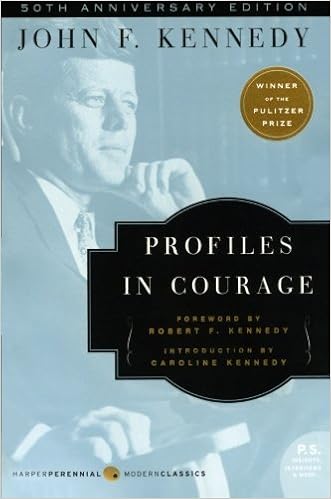
Книжка состоит из очерков о политиках прошлого, которые в трудные для них моменты проявляли принципиальность вместо того, чтобы послушно идти на поводу у общественного мнения.
Последняя глава (в написании которой Кеннеди участвовал больше, чем в других) посвящена Роберту Тафту, сенатору из Огайо, который во время избрания Кеннеди в Сенат в 1953 стал лидером республиканского большинства и умер позже в том же году. Принципиальность Тафта, согласно книжке, проявилась в его критике Нюрнбергских процессов, как нарушающих принцип отказа от обратного применения закона и подмены правосудия местью.
On October 6, 1946, Senator Taft appeared before a conference on our Anglo-American heritage, sponsored by Kenyon College in Ohio. The war crimes trial was not an issue upon which conference speakers were expected to comment. But titling his address “Equal Justice Under Law” Taft cast aside his general reluctance to embark upon startlingly novel and dramatic approaches. “The trial of the vanquished by the victors,” he told an attentive if somewhat astonished audience, “cannot be impartial no matter how it is hedged about with the forms of justice.”
I question whether the hanging of those, who, however despicable, were the leaders of the German people, will ever discourage the making of aggressive war, for no one makes aggressive war unless he expects to win. About this whole judgment there is the spirit of vengeance, and vengeance is seldom justice. The hanging of the eleven men convicted will be a blot on the American record which we shall long regret.The speech exploded in the midst of a heated election campaign; and throughout the nation Republican candidates scurried for shelter while Democrats seized the opportunity to advance. Many, many people were outraged at Taft’s remarks. Those who had fought, or whose men had fought and possibly died, to beat back the German aggressors were contemptuous of these fine phrases by a politician who had never seen battle. Those whose kinsmen or former countrymen had been among the Jews, Poles, Czechs and other nationality groups terrorized by Hitler and his cohorts were shocked. The memories of the gas chambers at Buchenwald and other Nazi concentration camps, the stories of hideous atrocities which had been refreshed with new illustrations at Nuremberg, and the anguish and suffering which each new military casualty list had brought to thousands of American homes—these were among the immeasurable influences which caused many to react with pain and indignation when a United States Senator deplored the trials and sentences of these merely “despicable” men. <...>
In these trials we have accepted the Russian idea of the purpose of trials—government policy and not justice—with little relation to Anglo-Saxon heritage. By clothing policy in the forms of legal procedure, we may discredit the whole idea of justice in Europe for years to come. In the last analysis, even at the end of a frightful war, we should view the future with more hope if even our enemies believed that we had treated them justly in our English-speaking concept of law, in the provision of relief and in the final disposal of territory.
Senator Taft was disheartened by the voracity of his critics—and extremely uncomfortable when one of the acquitted Nazi leaders, Franz Yon Papen, told interviewers upon his release from prison that he agreed with Taft’s speech. A spokesman for Taft issued only
one terse statement: “He has stated his feelings on the matter and feels that if others want to criticize him, let them go ahead.” But the Ohio Senator could not understand why even his old supporter, newspaper columnist David Lawrence, called his position nothing
more than a “technical quibble.” And he must have been particularly distressed when respected Constitutional authorities such as the President of the American Bar Association, the Chairman of its Executive Committee and other leading members of the legal profession all deplored his statement and defended the trials as being in accordance with international law.
For Robert Taft had spoken, not in “defense of the Nazi murderers” (as a labor leader charged), not in defense of isolationism (as most observers assumed), but in defense of what he regarded to be the traditional American concepts of law and justice. As the
apostle of strict constitutionalism, and the chief defense attorney for the conservative way of life and government, Robert Alphonso Taft was undeterred by the possibilities of injury to his Party’s precarious position or his own Presidential prospects. To him,
justice was at stake, and all other concerns were trivial. “It illustrates at once,” a columnist observed at that time, “the extreme stubbornness, 1 integrity and political strongheadedness of Senator Taft.”
В восхвалении принципиальности Тафта мог быть политический расчет - в республиканской партии в это время происходил раскол между консерваторами и либералами. Консерваторы были недовольны Эйзенхауером и его недостаточной борьбой с коммунизмом и скучали по Тафту и Маккарти. Этим расколом можно было воспользоваться.
President Kennedy and Ted Sorensen #throwbackthursday pic.twitter.com/5rIuU2ZnG0
— JFK Library (@JFKLibrary) June 5, 2014
Если Кеннеди и Соренсен хвалили Тафта за то, что тот пожертвовал собственной популярностью, но не поступился принципами, для самого Кеннеди народная популярность стала ключом к успеху на выборах.
В свое время Джордж Вашингтон не стал баллотироваться на третий срок, и ввел традицию по-джентльменски передавать власть преемникам. Традиция была нарушена в 1828, когда выскочка Эндрю Джексон сместил очередного преемника Джона Куинси Адамса, устроив популистскую революцию и породив демократическую партию.
The pre-Jackson era was the Augustan age of presidents, with George Washington being the model but his successors wearing the same mantle of aristocratic preferment. For the quarter-century before Jackson, presidents essentially anointed their successors: Thomas Jefferson chose James Madison, Madison chose James Monroe, Monroe chose John Quincy Adams. By frustrating Adams’ bid for reelection, Jackson broke the mold. He became president at a time when states had abandoned their property requirements for voting and stopped insisting on long residency. Jacksonian democracy fell short of today’s model; few women or African-Americans could vote. But by enfranchising nearly all adult white males and not just those who owned property, it represented a huge step forward from the unabashed elitism of the 18th century.
https://www.politico.com/magazine/story/2017/01/andrew-jackson-donald-trump-populist-president-history-214705
В последующие годы кандидат на выборы от основных партий выбирался келейным образом. Праймериз начали проводить в 20 веке, но поначалу только в отдельных штатах. Их результаты принимались во внимание, но не были определяющими. Так, отец Роберта Тафта, президент Уильям Говард Тафт был выдвинут кандидатом в 1912 несмотря на то, что Тед Рузвельт побеждал его на праймериз. Таким же образом Эйзенхауэра предпочли Роберту Тафту в 1952. Руководство партии (влиятельные сенаторы, губернаторы и мэры) собирались в прокуренной комнате и тщательно взвешивали аргументы за и против разных кандидатов. Джэк Кеннеди переломил эту традицию в 1960. После него популярность стала определяющим фактором - это способствовала как демократизации партий, так и ослаблению защиты от демагогов и популистов, о которой беспокоились отцы-основатели.

Имидж интеллектуального автора, молодого здоровяка и примерного семьянина с красавицей-женой несколько не соответствовал действительности. Но с помощью новой среды коммуникаций - телевизора - создавал привлекательный образ, с которым избиратели по всей стране стали связывать свои надежды. Помогла и легкость путешествий по стране в личном самолете. Массовая популярность Кеннеди стала решающим фактором в его борьбе за демократическую номинацию.
When JFK announced he was running for president in 1960, he didn’t have the support of a single major Democratic constituency or interest group. Organized labor and civil rights organizations backed Sen. Hubert Humphrey, a redoubtable liberal from Minnesota. White-collar liberals, including Eleanor Roosevelt, adored Adlai Stevenson, the intellectual former governor of Illinois who had lost presidential races to Dwight Eisenhower in 1952 and 1956. Congressional Democrats and many Southerners favored Senate Majority Leader Lyndon Johnson. Harry Truman, the most recent Democratic president, was for Sen. Stuart Symington, who shared his home state of Missouri. It was easy for party elders to see Kennedy as little more than a collection of downsides: an absurdly young millionaire playboy Roman Catholic junior senator.
In addition to his family’s money, however, Kennedy had one great asset: himself. Before he formally launched his candidacy, Kennedy spent nearly five years developing a national campaign. Through harnessing volunteers, consolidating his local political base, delivering speeches around the country, publishing a hit book and magazine articles and making television appearances, Kennedy did everything he could to build, in today’s terms, a powerful personal brand. He attained a level of celebrity matched by few Americans, inside or outside of politics. He put it to the test in a series of primaries. And he wielded his victories as a giant magnet, pulling old-guard Democrats looking to support a winner into line. By the time JFK gave his acceptance speech calling on citizens to face the challenges of the “New Frontier” at the 1960 Democratic convention, he had already kicked the struts out from a power structure that didn’t realize how close it was to collapse. Kennedy forever changed the presidential nominating system—probably his least-understood significant political accomplishment.
https://www.politico.com/news/magazine/2020/06/13/jfk-1960-primaries-donald-trump-198638
British PM Neville Chamberlain in 1938 called the conflict between Nazi Germany and my native Czechoslovakia a "quarrel in a far away country, between people of whom we know nothing.”
— Madeleine Albright (@madeleine) June 13, 2020
Less than two years later, the Nazis were bombing London. https://t.co/pyhJoY8Xje
Если президентство Кеннеди - это во-многом президентство Теда Соренсена, то президентство Трампа несет печать его спичрайтера и советника Стивена Миллера.
We are restoring the fundamental principles that the job of the American soldier is not to rebuild foreign nations, but defend — and defend strongly – our nation from foreign enemies. We are ending the era of endless wars. In its place is a renewed, clear-eyed focus on defending America’s vital interests. It is not the duty of U.S. troops to solve ancient conflicts in faraway lands that many people have never even heard of. We are not the policemen of the world.
But let our enemies be on notice: If our people are threatened, we will never, ever hesitate to act. And when we fight, from now on, we will fight only to win. As MacArthur said: “In war, there is no substitute for victory.”
https://www.whitehouse.gov/briefings-statements/remarks-president-trump-2020-united-states-military-academy-west-point-graduation-ceremony/

Цитируемые Трампом слова генерала Макартура "there is no substitute for victory" относились ко времени Корейской войны и служили параноидальным оправданием для продолжения этой войны, как средства остановить наступление коммунизма в Европе:
“It seems strangely difficult for some to realize that here in Asia is where the Communist conspirators have elected to make their play for global conquest, and that we have joined the issue thus raised on the battlefield, that here we fight Europe’s war with arms while the diplomats there still fight it with words; that if we lose the war to communism in Asia the fall of Europe is inevitable, win it and Europe most probably would avoid war and yet preserve freedom. As you point out, we must win. There is no substitute for victory.”
После этого письма Трумэн принимает решение об увольнении Макартура и оставляет запись в дневнике:
"MacArthur shoots another political bomb through Joe Martin, leader of the Republican minority in the House. This looks like the last straw. Rank insubordination. Last summer he sent a long statement to the Vets of Foreign Wars – not through the high command back home, but directly! He sent copies to newspapers and magazines particularly hostile to me... I’ve come to the conclusion that our Big General in the Far East must be recalled.”
https://www.trumanlibraryinstitute.org/this-day-in-history-truman-dismisses-macarthur/
Вместо с недовоеванной войной в Корее вопрос из 1950ых о правомочности Нюрнбергских процессов остается висеть в воздухе.
В Германии успешно прошел процесс денацификации, которому позже помогли собственные судебные процессы над нацистскими преступниками (такие, как Auschwitzprozesse из 1963, художественно изображенный в фильме "Im Labyrinth des Schweigens" из 2014).
После американской Гражданской войны судебный процесс над Джефферсоном Дэвисом, президентом Конфедерации, был призван расставить точки в оценке предательства. В Виргинии были уже отобраны присяжные (12 белых и 12 черных). Но суда не состоялась - Эндрю Джонсон президентским указом помиловал Дэвиса вместе со всеми другими участниками войны.
Jefferson Davis was caught and captured in his wife’s clothes. After Union soldiers apprehended Davis, he sat in a prison cell for three years waiting for trial. Several U.S. Attorneys indicted him for high treason for his role as President of the Confederacy. Ultimately it was decided that he should face trial in the United States District Court for the District of Virginia, where both U.S. District Judge John C. Underwood and Chief Justice Samuel Chase would hear the case. However, after four years of delay, for reasons including President Johnson’s impeachment, Jefferson Davis’s trial never occurred. Davis was one of many beneficiaries of President Johnson’s full and unconditional pardons on Christmas Day 1868.
https://www.natlawreview.com/article/treason-applied-founders-intended
A Kentucky commission voted Friday to take down a statue of Confederate President Jefferson Davis from the state Capitol, adding its voice to a global push to remove symbols of racism and slavery.https://t.co/00e4rYsvR3 pic.twitter.com/RwNh66kF3D
— The Daily Herald (@thedailyherald) June 14, 2020
В результате возник Куклуксклан (для борьбы с которым Улиссу Гранту потребовалось создать министерство юстиции) и героизация Конфедерации в мифах про "Lost Cause". Через 160 лет после войны статую Дэвиса (воздвигнутую в 1936) приходится удалять из столицы Кентукки (штата воевавшего за Север).
В 1992 был упущен шанс сделать из "Дела КПСС" процесс против коммунистической партии, как преступной организации.
Владимир Буковский: Тогдашняя власть не решилась провести настоящий суд типа Нюрнбергского над КПСС, а именно этого мы и требовали тогда от российского руководства, на это они не пошли. Вот если бы мы тогда добились своего и провели Нюрнбергского типа трибунал над коммунистической системой, подчеркиваю — системой, мы никогда не требовали наказания каких-то отдельных лиц или преследования, мы говорили, что должна быть осуждена система, вот из этого неизбежно следовали бы люстрации и тогда бы никаких Путиных к власти бы не пришло. Но на это не решилась власть, как мы с вами понимаем и как об этом уже говорилось, в связи с тем, что они сами были плоть от плоти и кровь от крови КПСС, это для них была мать родная. На это они не пошли.
https://www.svoboda.org/a/25452052.html
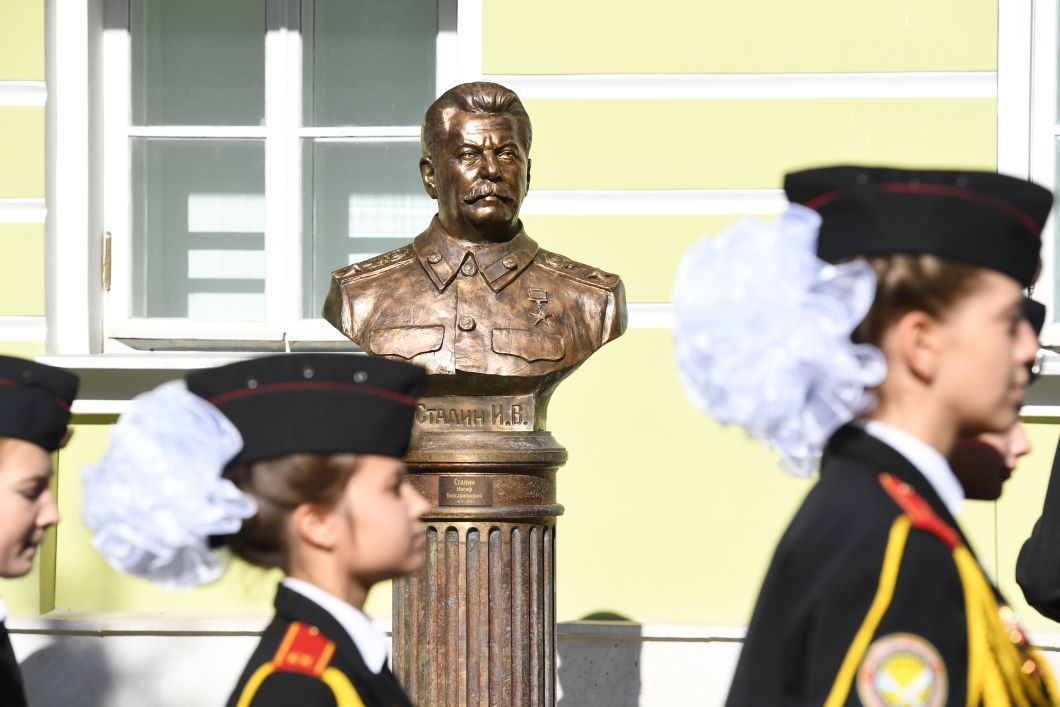
В результате коммунисты в центре Москвы носят цветы к бюсту Сталина работы Церетели, а российские граждане с каждым годом со все большей теплотой относятся к Сталину, на фоне мифов про войну и победу.
Под влиянием текущих событий негативные характеристики образа Сталина, не исчезая полностью, отступают на второй план. Вперед выдвигаются представления о Сталине как победителе в Великой Отечественной войне, создателе великой советской державы, суровом руководителе, который сумел навести порядок в стране.
Так, за последнее десятилетие постепенно снижалось количество россиян, готовых признать Сталина преступником: с 38% в 2009 году до 26% в 2017-ом. И наоборот, росло число тех, кто поддерживает установку памятника Сталину – с 26% до 47%. Наконец, в марте этого года число россиян, положительно оценивающих роль Сталина в истории нашей страны, достигло рекордных 70% (во второй половине 2000-х гг. этот показатель едва превышал 40%). Можно также вспомнить лидерство Сталина среди «выдающихся людей всех времен и народов» в опросах 2012 и 2017 годов. Все эти данные трудно интерпретировать иначе, чем улучшение отношения к фигуре Сталина, его постепенную реабилитацию в российском общественном мнении.
https://www.levada.ru/2019/05/22/stalin-repressii-tverdaya-ruka/
В истории добро и зло часто причудливым образом перемешаны, но потеря способности их различать ведет к утере морального компаса.


