![[personal profile]](https://www.dreamwidth.org/img/silk/identity/user.png)
Женевская конвенция
Oct. 27th, 2020 08:48 pm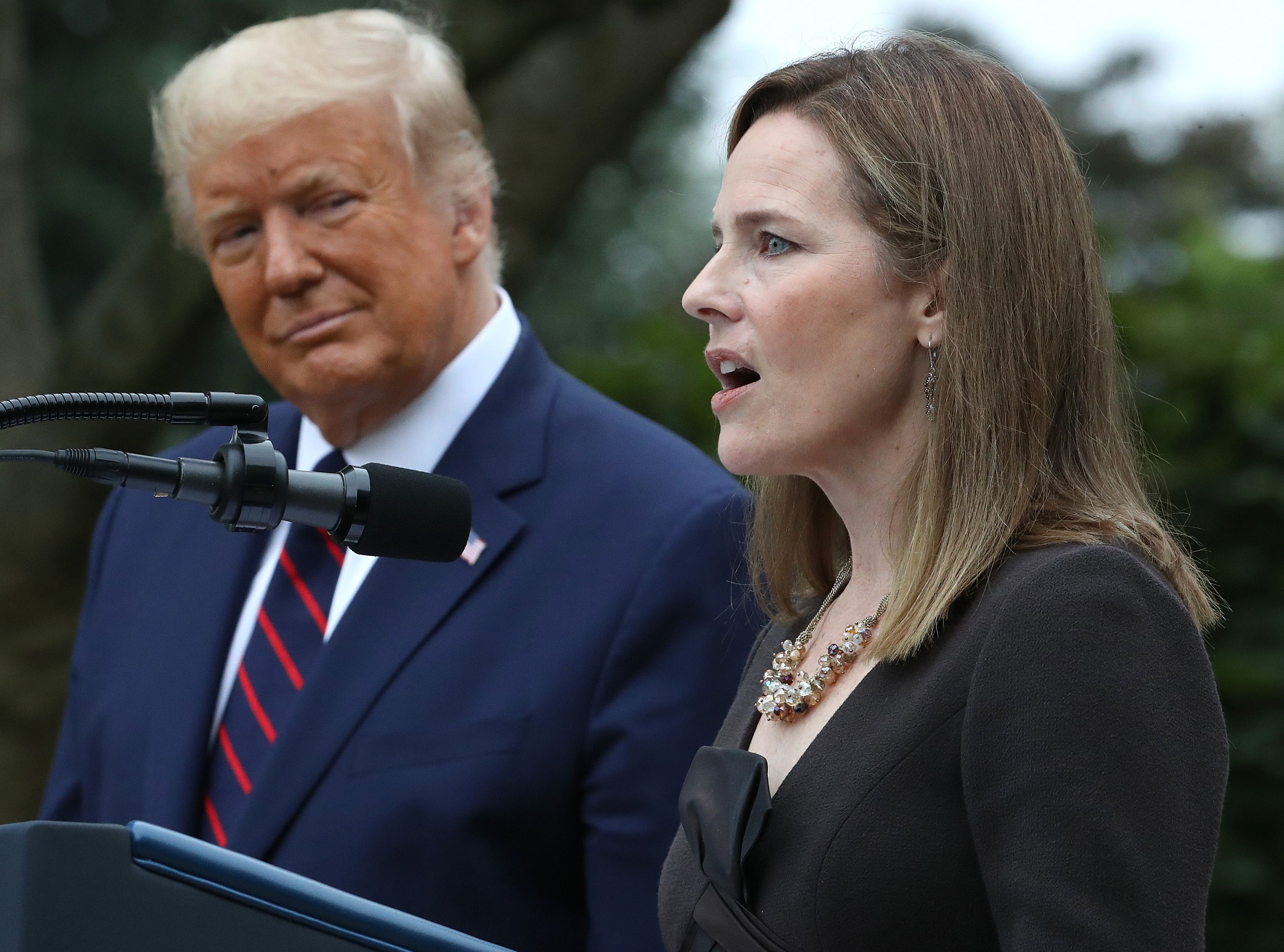
Независимо от того, что произойдёт через неделю, Америка уже свернула на новые рельсы с заменой RBG на ACB.
Эра борьбы за гражданские права в 1960ых была временем Верховного суда Эрла Уоррена, за отставку которого неустанно боролись предтечи Трампа.
TERRY GROSS, Host: So what were some of the accomplishments of the Warren court?
JIM NEWTON: Well, I think you'd have to start with--the landmark decisions of the Warren court would include the right of privacy in Griswold, which is now, of course, the foundational right debated in the context of abortion. The right to counsel in state trials. Before the Warren court, poor defendants were in some states required to defend themselves. Probably the biggest case of all, Brown vs. Board of Education, which curiously was really Warren's first big decision as a Supreme Court justice, which established the principle of school desegregation and then later the follow-up cases after Brown which desegregated a whole host of public institutions. Also a variety of cases in the area of police procedure, Miranda, probably the best known, requires police to read suspects their rights. In case after case, I think what's really interesting about them too is they were almost to a case extremely controversial in that period and yet the rights that they establish are really very much accepted rights of American life today for the most part. So I think the Warren court's legacy has actually worn quite on the country. <...>
GROSS: What do you see as being Earl Warren's legacy?
NEWTON: On a national scale, I think that the architecture of civil liberties that we enjoy today in this society are largely there. Not exclusively, but largely there because the Warren court and Earl Warren put them there. Whether it's a right to privacy or a right to counsel or a right to vote in elections that--where votes are counted equally. Whether it is in the principle of integration as a value of American society. These are the real hallmarks of a mature society, and it's important to remember that they were not there pre-Warren. And so I think Warren personally and certainly the Warren court deserves a huge amount of credit for leaving a legacy of a fairer and more mature country. There is a separate legacy and that is in California that is not, obviously, national in scope, but Warren left a legacy in California of genuine political centrism. He--in 1946, he was nominated not only by the Republican Party in California but also by the Democratic Party for governor. That is an altogether unimaginable achievement in modern California life. But he really does leave for California a sense of what it is to genuinely govern from the center. And I think that, too, while that is not national in scope, that is a profound contribution to the history of the nation's largest state.
https://www.npr.org/templates/story/story.php?storyId=6592640
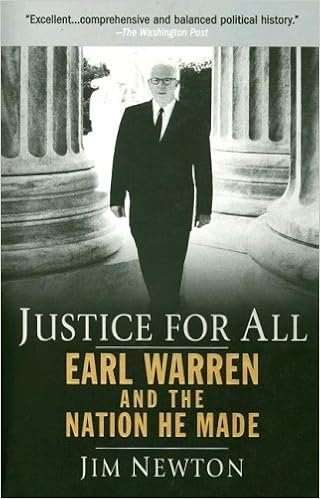
Замена ненавистного им Уоррена на Бергера и последующий разворот суда стали одним из самых существенных наследий Никсона.
Their enmity dated to 1946, when Warren was the governor of California and Lieutenant Commander Nixon, home from war and service in the Navy, declared his candidacy for the Los Angeles-area congressional seat held by Democratic Representative Jerry Voorhis.
Warren was a progressive Republican who won by appealing to Democrats and Independents in a state that then favored non-partisan politics. He had nice things to say about Voorhis, who had helped represent California’s interests in Congress. When Nixon sought to have Harold Stassen, a Republican presidential hopeful, come to California and campaign for him, Warren—who had his own national ambitions—persuaded Stassen to stay away.
Nixon defeated Voorhis, but never forgot what Warren had done. “Right then, a slow burn was kindled in Richard Nixon,” campaign aide Bill Arnold, recalled.
The slow burn blazed in 1950, when Nixon ran a successful Red-baiting campaign for the U.S. Senate against his Democratic opponent— Helen Gahagan Douglas - and Warren refused to endorse him. Nixon and his friends were outraged. “Unless a man is a crook he is entitled to the united support of the party he represents,” Nixon’s mentor, banker Herman Perry, wrote the congressman. Warren’s actions would “not go well with me and 80 percent of the real Republicans.”
When Warren stumbled during the Republican presidential primaries in 1952, Nixon’s wife, Pat, gloated in a letter to a friend. “Warren’s showing in Oregon was sad,” she wrote. “I’m not crying.”
Nixon himself went further. He boarded the Warren campaign train as it made its way from Sacramento to the Republican convention in Chicago, and stealthily urged California’s delegates to support the governor’s rival, General Dwight Eisenhower. The episode became known in state political lore as “The Great Train Robbery.” At the convention, Nixon was tireless, securing the delegation for Ike on the key procedural votes that determined the nomination.
Warren, fuming, sent an envoy to Eisenhower. “We have a traitor in our delegation,” he charged. “It’s Nixon.” But Ike declined to act. In fact, he told the envoy, Nixon was likely to be the general’s running mate. For “keeping the California delegation in line,” Nixon had been given a place atop the short list, Eisenhower’s campaign manager later confirmed.
The feuding reached full boil. At the California delegation caucus, Warren thanked his supporters for their help and publicly snubbed Nixon. “The slight was perfectly obvious, as it was intended to be,” one of Nixon’s friends recorded in a diary. Warren believed that “Dick was trying to sabotage him.”
From that day forward, “Warren hated Nixon,” longtime Republican fundraiser Asa Call remembered in an oral history. Over the years, Warren would tell people how “Nixon cut my throat from here to here,” and gesture with his finger across his neck. <...>
The quarrel ebbed until 1968, when Nixon launched yet another comeback, campaigning for the presidency. The smoldering fuse got fanned, and the resulting detonation transformed the Supreme Court nomination process.
Warren was ready to retire, but didn’t want Nixon to name his successor. He approached President Lyndon Johnson, and reached an agreement to have LBJ’s good friend and adviser, Supreme Court Justice Abe Fortas, promoted to chief justice after just a couple of years on the court.
Nixon would have none of it. Employing the reasoning used by today’s Republicans when they blocked Judge Merrick Garland’s nomination to the court last year, Nixon argued that “a new president with a fresh mandate” should fill the empty seat.
Senate Republicans went to work, filibustered, and blocked the Fortas nomination. Warren was compelled to stay on, with the sour duty of swearing-in Nixon as the 37th president in January 1969.
Senate Democrats, however, seethed at the manner in which Fortas was treated. Their wrath grew downright broiling when reports from the Nixon Justice Department confirmed that Fortas was on a $20,000-a-year retainer from a convicted financier. Fortas resigned in May, and Warren, not getting any younger, finally stepped down from his seat in June. Nixon would now have two seats to fill.
https://www.smithsonianmag.com/history/inside-story-richard-nixons-ugly-30-year-feud-earl-warren-180962614/
( Read more... )

