![[personal profile]](https://www.dreamwidth.org/img/silk/identity/user.png)
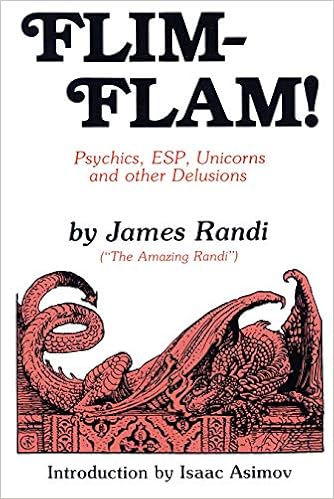
Знаменитый фокусник Рэнди Джеймс ("Amazing Randi") прославился разоблачением разного рода шарлатанов. Эта деятельность иногда напоминала ношение воды в решете - успешное разоблачение, к примеру, не уменьшило число зрителей на представлениях мошенника Юрия Геллера, гнущего ложки силой мысли. Тем не менее эта деятельность помогала пропагандировать научный подход к знанию ни традиции американского трезвомыслия.
During the late ’60s and early ’70s, popular interest in the paranormal grew: There was a fascination with extrasensory perception and the Bermuda Triangle and best sellers like “Chariots of the Gods,” which claimed Earth’s ancient civilizations were visited by aliens. There were mystics, mind-readers and psychic surgeons, who were said to be able to extract tumors from their patients using only their bare hands — and without leaving a mark. Randi continued on his crusade. Few of his fellow illusionists were interested in exposing the way that conjuring tricks were used to dupe gullible audiences into believing in psychic abilities. “Everybody else just kind of rolled their eyes,” Penn Jillette, a good friend of Randi’s, told me. “'Why is Randi spending all this time doing this? We all know there is no ESP. It’s just stupid people believe it, and that’s fine.’ ”
https://www.nytimes.com/2014/11/09/magazine/the-unbelievable-skepticism-of-the-amazing-randi.html
Рэнди стал родоначальником движения скептиков, которое в конце 2000ых частично слилось с движением "новых атеистов", вдохновленных книжками вроде "The God Delusion" Ричарда Докинза или "God Is Not Great: How Religion Poisons Everything" Кристофера Хитченса.
По иронии судьбы личная жизнь разоблачителя мошенников оказалась связана с мошенничеством. в 2010 Рэнди в возрасте 81 год "вышел из клозета" и признался в гомосексуальности, а на следующий год его партнер (позже супруг) был арестован за то, что жил под чужим именем по поддельным документам.
Randi was all but marooned in the house — he was forbidden to drive while he awaited cataract surgery — and Alvarez had been forced to surrender his driver’s license, after a series of events that began on Sept. 8, 2011. That morning there was a knock on the front door. When Randi opened it, a pair of federal agents stood before him. They asked to speak to Alvarez. Outside, Randi could see two unmarked S.U.V.s blocking the driveway and at least half a dozen agents surrounding the perimeter of the property. When Alvarez came downstairs from his room, the agents explained there was a problem. They wanted to talk to him about passport fraud. They cuffed him and took him out to the car. Randi was left alone in the house, holding business cards from State Department agents, who, Randi said, gave him instructions to wait 24 hours before calling them.
The agents took Alvarez directly to Broward County Jail, where he was photographed, issued a gray uniform and registered as FNU LNU: “first name unknown, last name unknown.” In an interview room at the jail, he told an agent everything: He had fled homophobic persecution in Venezuela and had come to the U.S. on a two-year student visa. He met Randi and knew he wanted to stay with him. But when his visa expired, there was no way to renew it. He said he was given the name and Social Security number of José Alvarez by a friend in a Fort Lauderdale nightclub, and used it to apply for a passport in 1987. Alvarez told the agent he was deeply sorry for the trouble he had caused the real Alvarez — who he believed was dead but turned out to be a teacher’s aide living in the Bronx. FNU LNU said his real name was Deyvi Orangel Peña Arteaga.
Charged with making a false statement in the application and use of a passport and aggravated identity theft, Peña faced a $250,000 fine, a sentence of up to 10 years in prison and deportation to Venezuela. After six weeks in jail, he was released on a $500,000 bond, and he subsequently agreed to plead guilty to a single charge of passport fraud. At a sentencing hearing in May 2012, the judge considered letters of support from Randi and Peña’s friends from the world of art, science and entertainment, including Richard Dawkins and Penn Jillette, as well as from members of charities to which Peña had given his time and work. The judge considered Peña’s long relationship with Randi, and Randi’s failing health. He gave him a lenient sentence: time served, six months’ house arrest and 150 hours’ community service.
But Peña still had to contend with the immigration authorities. After the sentencing hearing, he had been home for five days when Immigration and Customs Enforcement agents appeared at the door. “Say goodbye,” they told him. Peña assured Randi he would be back that afternoon. He was taken to the Krome detention center in Miami, and remained there while his lawyer tried to find a way of keeping him in the United States. After two months of incarceration, Peña was finally released from Krome on the evening of Aug. 2, 2012, to find that Randi had spent half the day waiting outside the front gate for him. The couple were married in a ceremony in Washington the following summer.
Today, Peña remains on probation and no longer holds any identity documents except a Venezuelan passport with his birth name. United States immigration authorities have agreed not to deport him for now, but he has no formal immigration status in the United States: were he to leave the country, he would be unable to return.
https://www.nytimes.com/2014/11/09/magazine/the-unbelievable-skepticism-of-the-amazing-randi.html
( Read more... )

